You've seen the marketing — every AI image tool claims to be the best. This comparison cuts through that and looks at what the top tools actually produce in 2026, who each one is built for, and what you'll realistically spend to get results you're happy with.
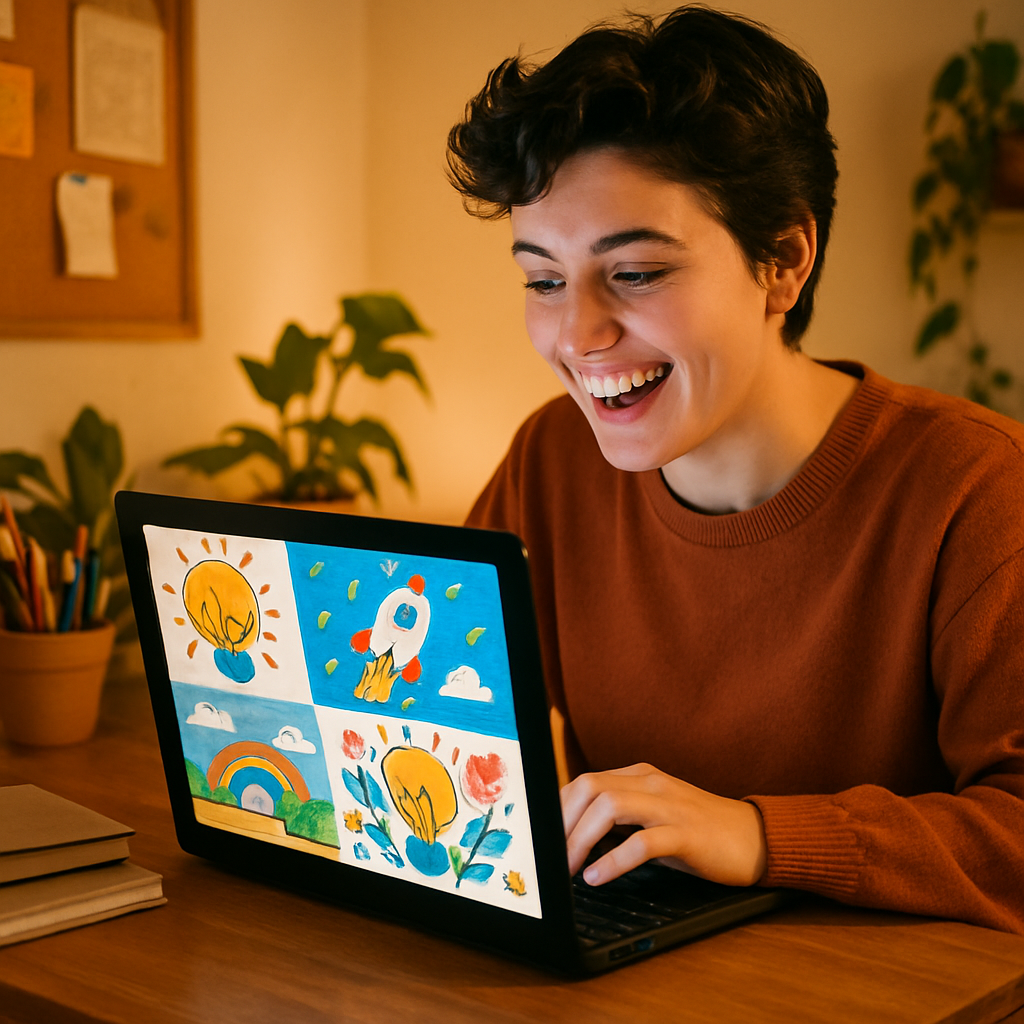
Quick answer: Midjourney remains the benchmark for stylized, artistic images. For photorealism, product shots, and portraits, the gap between top tools has narrowed significantly. The bigger difference in 2026 isn't output quality — it's pricing model. If you create occasionally, a subscription will cost you many times more per image than pay-per-image tools like ATXP Pics.
How Image Quality Actually Differs Between Tools
The honest answer is that the gap in raw image quality between leading tools has closed considerably. In 2024, Midjourney was in a class of its own. By 2026, several tools produce results that are difficult to distinguish without side-by-side comparison — especially for commercial use cases like product mockups, headshots, and social content.
Where real differences remain:
- Artistic and stylized images — Midjourney still leads here. Its aesthetic sense and handling of complex compositions is unmatched for creative work.
- Photorealistic portraits — ATXP Pics, Adobe Firefly, and DALL·E 3 all perform well. Results depend more on prompt quality than the tool itself.
- Product and commercial imagery — Most top tools handle this competently. Speed and cost become the deciding factors.
- Text inside images — This has improved across the board, but remains imperfect in all tools. Verify any generated text before using it.
The practical takeaway: for most business and personal use cases, you won't hit a quality ceiling with any of the major tools. You'll hit a cost ceiling long before that.
Tool-by-Tool Breakdown
Midjourney
Best for: Stylized art, editorial imagery, creative projects where aesthetic quality is the primary goal.
Midjourney produces the most visually distinctive results of any tool. Its outputs have a coherence and compositional polish that's hard to replicate. The tradeoff is the pricing model — $10/month minimum, billed monthly whether you create or not. At 20 images a month, you're paying $0.50 per image. At 5 images a month, that climbs to $2.00 per image.
Adobe Firefly
Best for: Designers already inside the Adobe ecosystem, commercial-safe imagery, brand-controlled workflows.
Firefly's images are trained on licensed content, which matters if you're using outputs commercially and want to minimize licensing concerns. Quality is strong for clean, commercial-style images. It's subscription-bundled with Creative Cloud, so the value depends entirely on whether you're already paying for Adobe tools.
DALL·E 3 (via ChatGPT)
Best for: Users already inside ChatGPT who want image generation as part of a broader workflow.
Quality has improved significantly. The integration with ChatGPT's conversational interface makes prompt iteration easy. It's bundled with ChatGPT Plus ($20/month), so again — the value math depends on how heavily you use the broader platform.
ATXP Pics
Best for: Occasional creators, small businesses, anyone who wants strong results without a monthly commitment.
No subscription. Pay per image, a few cents each. Your balance never expires. The interface is a plain-English chat — describe what you want, get an image. No design software, no complicated settings, no monthly bill arriving when you haven't created anything. Quality is strong across portraits, product imagery, and social content.
The Real Cost Comparison
This is where the AI image quality comparison for 2026 gets genuinely useful. Raw quality is close enough across tools that pricing becomes the deciding variable for most people.
| Tool | Pricing Model | Cost Per Image (20/mo) | Cost Per Image (5/mo) | |---|---|---|---| | Midjourney Basic | $10/mo subscription | ~$0.50 | ~$2.00 | | Adobe Firefly | Bundled with CC ($55+/mo) | Varies | Varies | | DALL·E 3 | Bundled with ChatGPT Plus ($20/mo) | ~$1.00 | ~$4.00 | | ATXP Pics | Pay per image | ~$0.05–0.10 | ~$0.05–0.10 |
The math is unambiguous for anyone who creates occasionally. Subscriptions make sense if you're creating hundreds of images a month. For everyone else, pay-per-image is significantly cheaper — often by a factor of 10 or more.
How to Get the Best Results From Any Tool
Prompt quality drives output quality more than the tool you choose. A well-written prompt on a mid-tier tool will beat a vague prompt on the best tool every time. Here's a structure that works consistently:
Subject + style or mood + lighting + background or setting + technical framing
Example prompts
Professional headshot of a woman in her 40s, soft natural lighting, neutral gray background, confident and approachable expression, shallow depth of field, sharp focus
Product photo of a minimalist skincare bottle, white studio background, soft diffused light, clean shadows, editorial magazine style
Social media graphic for a coffee brand, warm earthy tones, overhead flat lay of a ceramic mug with steam, autumn leaves, cozy lifestyle aesthetic
Copy any of these directly, swap in your specifics, and you'll get strong results — on ATXP Pics or any of the tools above.
What to avoid
- Vague prompts ("make something cool" produces generic results on every platform)
- Overloading a prompt with conflicting styles
- Skipping lighting details — lighting is the single biggest driver of whether an image looks professional
Who Each Tool Is Actually For
Choose Midjourney if you're a creative professional who creates large volumes of stylized or artistic images and a $10–$30/month subscription is a natural line item in your budget.
Choose Adobe Firefly if you're already paying for Creative Cloud and want generation integrated into your existing design workflow.
Choose DALL·E 3 if you're a heavy ChatGPT Plus user and want image generation as one part of a larger AI workflow — not as a standalone product.
Choose ATXP Pics if you create images occasionally, want to avoid monthly charges, or just want to try AI image generation without committing to anything. Pay for what you use. Stop when you're done. Your balance waits for you next time.
The Bottom Line
In 2026, the AI image quality comparison story is less about which tool produces the best images — and more about which pricing model fits how you actually work. For occasional creators, the subscription model costs 10–40x more per image than pay-per-image. The quality difference rarely justifies that gap.
If you're creating a handful of images a month — for social media, a product launch, a presentation, or anything else — pay-per-image wins on pure economics.
Start generating images on ATXP Pics — no subscription required →