Running a small business means every dollar has a job. Hiring a designer for every social post, promotional graphic, or product image isn't realistic — but blurry phone photos and stock photo clichés aren't doing you any favors either. This guide shows you exactly how to use AI images for small business marketing, with real prompt examples you can copy today.
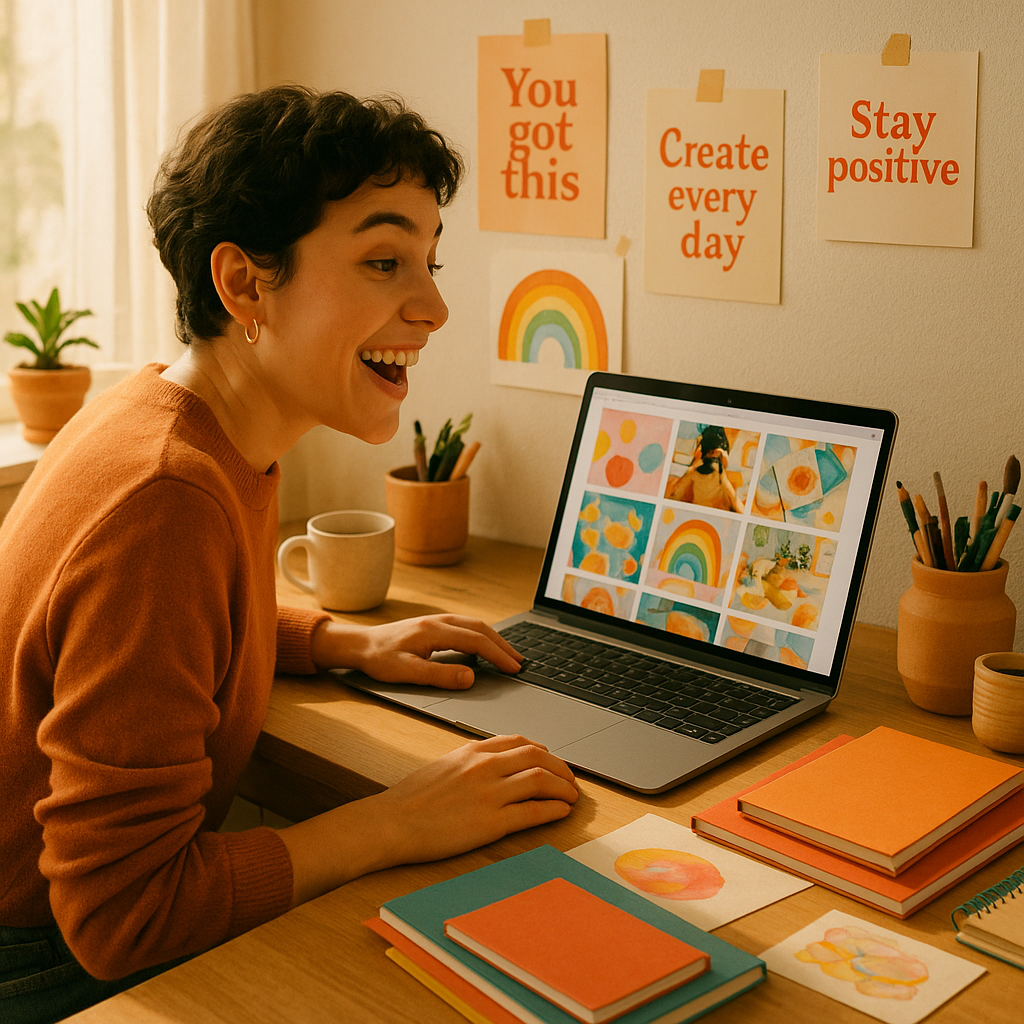
Quick answer: AI image generators let small business owners create professional-quality marketing visuals by typing a description in plain English. No design skills, no expensive software, no monthly subscription required. At a few cents per image with no commitment, it's the most cost-effective visual content option available to small businesses.
Why AI Images Work for Small Business Marketing
AI image generation closes the gap between what small businesses need visually and what they can afford to produce. Traditional options — hiring a designer, buying stock photos, or learning design software — all require either significant money, time, or both. AI generation requires neither.
The practical advantage is speed. A social media post that would take a designer an hour to produce, or a stock photo search that returns nothing quite right, becomes a 30-second task. Describe the image, generate it, download it, post it.
For small businesses specifically, the use cases that deliver the most value are:
- Social media content — consistent, on-brand images for Instagram, Facebook, and LinkedIn
- Promotional graphics — sale announcements, seasonal campaigns, event flyers
- Product mockups — showing products in lifestyle settings without a photoshoot
- Website and email visuals — header images, blog thumbnails, and email banners
- Logo concepts — early-stage ideation before committing to a professional designer
How to Create Marketing Images with AI: A Step-by-Step Process
The entire process takes under two minutes once you know what you want. Here's how to approach it systematically so you get usable images on the first or second try.
Step 1: Define the Image's Job
Before you type anything, answer one question: what is this image supposed to make someone do or feel? A product image should create desire. A promotional graphic should communicate urgency. A brand image should establish trust. That answer shapes your prompt.
Step 2: Build a Prompt with Four Components
Good AI image prompts follow a simple structure: subject + setting + style + mood. You don't need all four every time, but including at least three produces noticeably better results.
Prompt template:
[What's in the image] in [where/context], [visual style], [mood or lighting]
Example prompts for common small business use cases:
A rustic wooden cutting board with fresh herbs and olive oil on a marble kitchen counter, warm natural lighting, editorial food photography style
A confident woman in business casual clothing working at a bright modern desk, clean lifestyle photography, warm and approachable
A small boutique storefront with a handwritten "Summer Sale" sign in the window, golden hour sunlight, inviting and cheerful
Step 3: Generate, Evaluate, Refine
Generate your first image and treat it as a draft. If the composition is right but the lighting is off, adjust that one element in your next prompt. If the style isn't matching your brand, add a style reference ("flat graphic illustration" or "bright and airy photography"). Most images reach a usable state within two or three iterations.
Step 4: Apply Basic Brand Consistency
AI images won't automatically match your brand colors or fonts — that final step still happens in a simple tool like Canva or even your phone's photo editor. Generate the image, then drop it into your existing template, overlay your logo, or add your brand's text treatment. The combination of AI-generated imagery and simple text editing covers nearly every small business marketing need.
What This Actually Costs
Most small businesses creating AI images for marketing will spend a few dollars a month — not a few hundred. The comparison to subscription-based tools is stark.
| Scenario | Midjourney Basic ($10/mo) | ATXP Pics (pay-per-image) | |---|---|---| | 5 images/month | $2.00 per image | ~$0.05 per image | | 20 images/month | $0.50 per image | ~$0.05 per image | | 0 images (slow month) | $10.00 (charged anyway) | $0.00 | | Balance expiration | Subscription resets monthly | Never expires |
The math is straightforward for any business that doesn't create images every single day. A subscription charges you for your slow months. Pay-per-image doesn't.
Create your first business image →
The Most Common Mistakes (and How to Avoid Them)
The most common mistake is prompts that are too vague. "A coffee shop image" will produce something generic. "A cozy independent coffee shop interior with exposed brick walls, mismatched vintage chairs, and warm Edison bulb lighting, shot in a candid documentary style" produces something you'd actually post.
Three other mistakes worth avoiding:
- Ignoring aspect ratio. Instagram Stories need vertical images. Twitter headers need horizontal ones. Specify your dimensions or orientation in the prompt ("horizontal 16:9 format" or "vertical portrait orientation").
- Skipping the brand filter step. AI images are a starting point. Running them through your brand template takes 60 seconds and makes them look intentional rather than generic.
- Generating one image and committing. Generate three or four variations of the same concept before deciding. The second or third is almost always better than the first.
Which Marketing Channels Benefit Most
Social media delivers the highest return on AI-generated images because the volume demand is highest and the tolerance for imperfect production is greatest. A polished-but-not-perfect image performs well on Instagram. The same imperfection would look out of place on a print brochure.
Ranked by how well AI images fit the channel:
- Instagram and Facebook posts — highest fit; fast turnaround matches the content cadence
- Email marketing headers — high fit; simple compositions work well
- Website blog thumbnails — high fit; consistent style is achievable
- Google Business Profile photos — medium fit; supplement with real photos, not replace
- Print materials — lower fit; resolution and precision requirements are stricter
Start With One Use Case
Pick the single marketing channel where you feel the biggest visual content gap right now — likely social media — and start there. Generate five images for this week's posts. See how the process feels and how the images perform before expanding to other channels.
The goal isn't to replace all your visual content creation at once. It's to stop being bottlenecked by design budget and turnaround time on the channels that matter most.
Small businesses that build AI image generation into their weekly content routine typically find they're posting more consistently, testing more creative directions, and spending a fraction of what stock photo subscriptions or freelance design would cost.