You remember the early AI image generators: six fingers, melting eyes, text that looked like it had been through a blender. A lot has changed. Here's an honest look at exactly how AI image generators have improved in 2026 — what's genuinely better, what still has limits, and how the pricing model shift is just as significant as the quality jump.
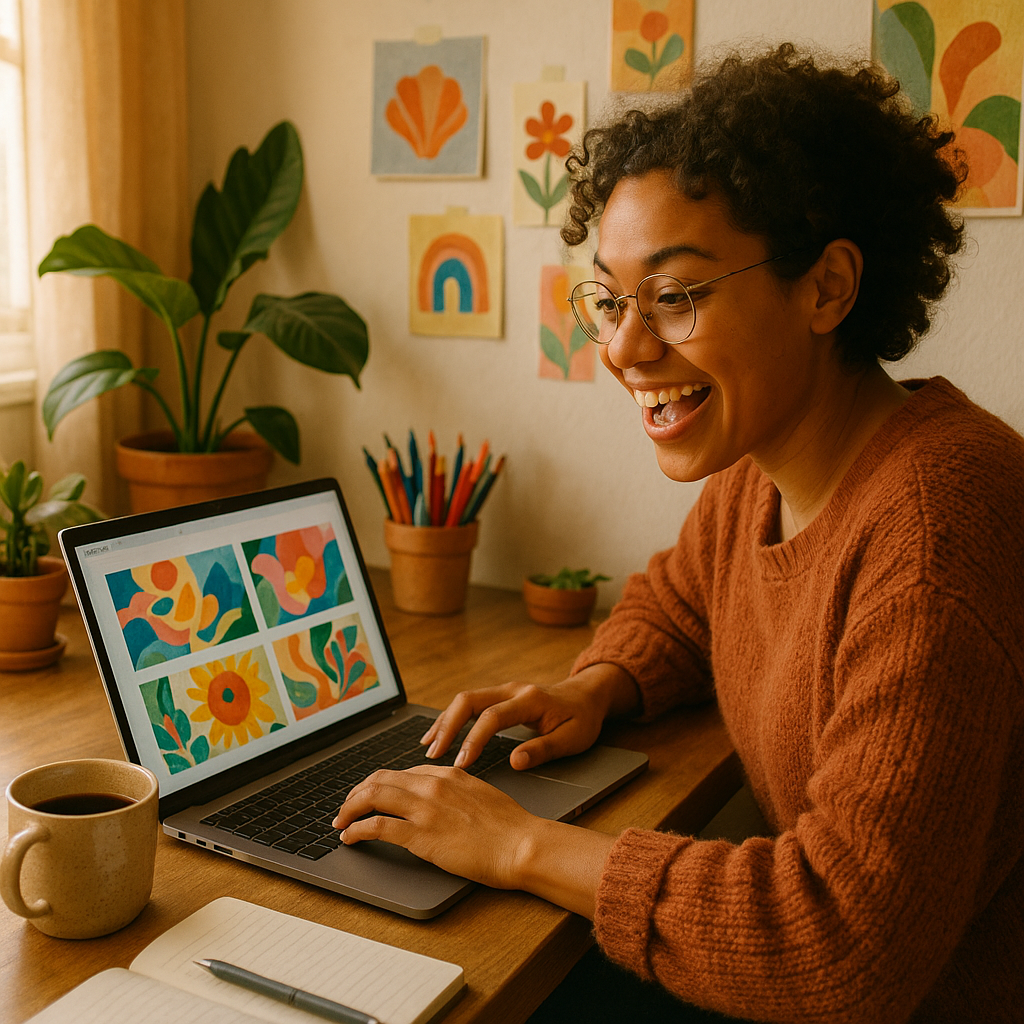
Quick answer: AI image generators in 2026 produce more accurate, detailed images from simpler, more natural prompts. Longstanding failure points — hands, faces, embedded text, complex compositions — are now handled reliably. Pricing has also shifted: pay-per-image models mean you no longer have to pay a monthly subscription for images you may never create.
Prompt Quality: Then vs. Now
Writing a prompt in 2026 is closer to describing something to a colleague than coding a command. Early AI image generators rewarded users who stacked dozens of modifiers — "ultra-realistic, 8K, HDR, volumetric lighting, artstation trending" — to coax out a decent result. That era is effectively over.
Current models interpret plain, conversational language accurately. You can write the way you actually think, and the image reflects your intent.
| What You're Describing | 2023–2024 Prompt Needed | 2026 Prompt Needed | |---|---|---| | A product on a marble surface | "product photography, white marble, studio lighting, 8K, sharp focus, professional" | "A skincare bottle on white marble, soft studio light" | | A business headshot | "professional headshot, man, 35mm lens, shallow DOF, LinkedIn, photorealistic" | "Professional headshot of a man in a navy blazer, neutral background" | | A logo concept | "flat design vector logo, minimalist, clean lines, white background, Adobe Illustrator style" | "Simple flat logo concept for a coffee brand, green and white" |
The result quality from the shorter 2026 prompts matches or exceeds what required exhaustive syntax two years ago.
Try this prompt today:
A warm, moody coffee shop interior at golden hour, wooden tables, soft window light, a single latte on the counter — photographic, no people
The Anatomy Problem Is Largely Solved
Hands, fingers, and facial anatomy — the defining embarrassments of early AI image generation — are now rendered accurately in the vast majority of outputs. In 2023, generating a person holding an object reliably required multiple regenerations, inpainting, or post-processing. Users built entire workflows around fixing hands.
In 2026, you can prompt for a person holding a coffee cup, a chef plating food, or a musician playing guitar and receive an anatomically correct result on the first or second try. Faces at standard angles are sharp and consistent. Eye alignment issues that plagued portrait generation are rare rather than routine.
What Still Has Limits
Honesty matters here. Some edge cases remain:
- Extreme or unusual angles (hands viewed from directly below, faces in sharp profile) can still produce occasional errors
- Crowds with many visible faces at high detail may show inconsistencies in background figures
- Embedded text inside images is dramatically better but still imperfect for longer strings or decorative fonts
These are edge cases, not everyday failures. For standard commercial and creative work, anatomy is no longer the obstacle it was.
Image Composition and Scene Complexity
Complex scenes with multiple subjects, depth layers, and specific spatial relationships now resolve correctly far more often. Earlier models frequently merged figures, confused foreground and background, or ignored relational instructions ("behind," "to the left of," "reflected in").
Current outputs handle:
- Multi-subject scenes with correct spatial placement
- Reflections and shadows that follow natural physics
- Backgrounds that complement rather than compete with the subject
- Consistent lighting direction across a full composition
This matters most for product mockups, editorial illustrations, and social media imagery where composition is the entire point.
The Pricing Shift Is as Important as the Quality Shift
The biggest practical change in 2026 isn't just image quality — it's that you no longer have to pay $10 or more per month whether you create images or not. Monthly subscription models made sense when AI image generation required expensive infrastructure that had to stay provisioned. That math has changed.
The real cost of a subscription when you create occasionally:
| Images Created / Month | Midjourney Basic ($10/mo) | ATXP Pics (pay-per-image) | |---|---|---| | 100 images | $0.10 / image | ~a few cents / image | | 20 images | $0.50 / image | ~a few cents / image | | 5 images | $2.00 / image | ~a few cents / image | | 0 images | $10.00 (charged anyway) | $0.00 |
If you create images in bursts — a project week here, a campaign there — a subscription charges you for the quiet months too. Pay-per-image pricing means your balance sits until you need it. Generate images without a subscription →
Who Benefits Most from 2026's Improvements
The people who benefit most from how AI image generators have improved in 2026 are the occasional creators — not the power users. Power users adapted to early tool limitations and built workflows around them. Occasional creators couldn't justify the learning curve or the monthly cost when output quality was unpredictable.
That calculation has flipped:
- Small business owners can generate product mockups, social graphics, and headshots without a designer or a steep prompt-writing learning curve
- Freelancers can produce client-ready concept images in seconds for pitches and proposals
- Content creators can match images precisely to a brief rather than settling for what the tool will produce
- Occasional users pay only for what they create, with no subscription eating into months they're not actively creating
The Honest Tradeoffs Still Worth Knowing
AI image generators in 2026 are not a replacement for every creative need. Here's where the honest comparison lands:
- For highly specific brand work requiring exact visual consistency across dozens of outputs, human art direction still adds value
- For licensed, original artwork with legal clarity around ownership, the landscape is still evolving
- For most commercial and content creation use cases — product shots, portraits, social media images, concept illustrations — current AI image generators produce professional results faster and at a fraction of the cost of alternatives
The improvement in 2026 isn't that AI image generation became magic. It's that it became reliable enough to use without a steep learning curve, a monthly commitment, or a tolerance for frequent failures.
The gap between what AI image generators promised and what they delivered has closed significantly. Plain prompts work. Anatomy is accurate. You don't need a subscription to access good results. If you haven't tried a current generator recently — or you've been paying monthly for a tool you use occasionally — the math and the output quality have both moved in your favor.